Group Games for Young People: Games for High School and College Groups

In young groups, game selection has one rule: no one should feel stupid. Games that look like kids' games don't get played, and games that are too personal make people uncomfortable. The line is narrow but clear — the games below sit right in that spot.
For a dorm room / small space
Space is tight, sound carries, you can't stand up. These three constraints automatically narrow game selection.
- Silent describing: Played silently, doesn't bother neighbors.
- Dice task game: Played sitting down, one phone is enough.
- Category counting: A category is given, you take turns naming things; whoever gets stuck is out.
- Impersonation round: Impersonate someone in the group and have them guess — the mode that sticks best in young groups.
For a class or club event
The group is large and mixed; the goal is to leave no one out. Team-based and simultaneous-play modes work here.
- Split the group into 3–4 teams; a 20-person class needs more than two teams.
- Pick modes where everyone plays at once — a student waiting for their turn drops out of the game.
- Cut round time to 45 seconds, keep pace high.
- Write the score on a board; visible scoring noticeably increases participation.
For a friend hangout
The boundary is wider here, but there's still a balance: make it fun, don't make it mean. The structure that works best is task games with difficulty levels — the group picks its own level.
- Start with warmup tasks, save the challenging ones for the middle of the night.
- Give everyone a pass; a struggling person skips a turn instead of dropping out.
- Let the game pick the personal questions — when someone in the group asks, it gets tense.
Three things that don't work in young groups
- A long rule explanation. An explanation over two minutes kills the game before it starts.
- Forced participation. A "everyone does it" task completely shuts out the quietest person in the group.
- A game that never ends. A game with no clear end falls apart on round 20; set a round count or target score.
Starting with a ready-made setup
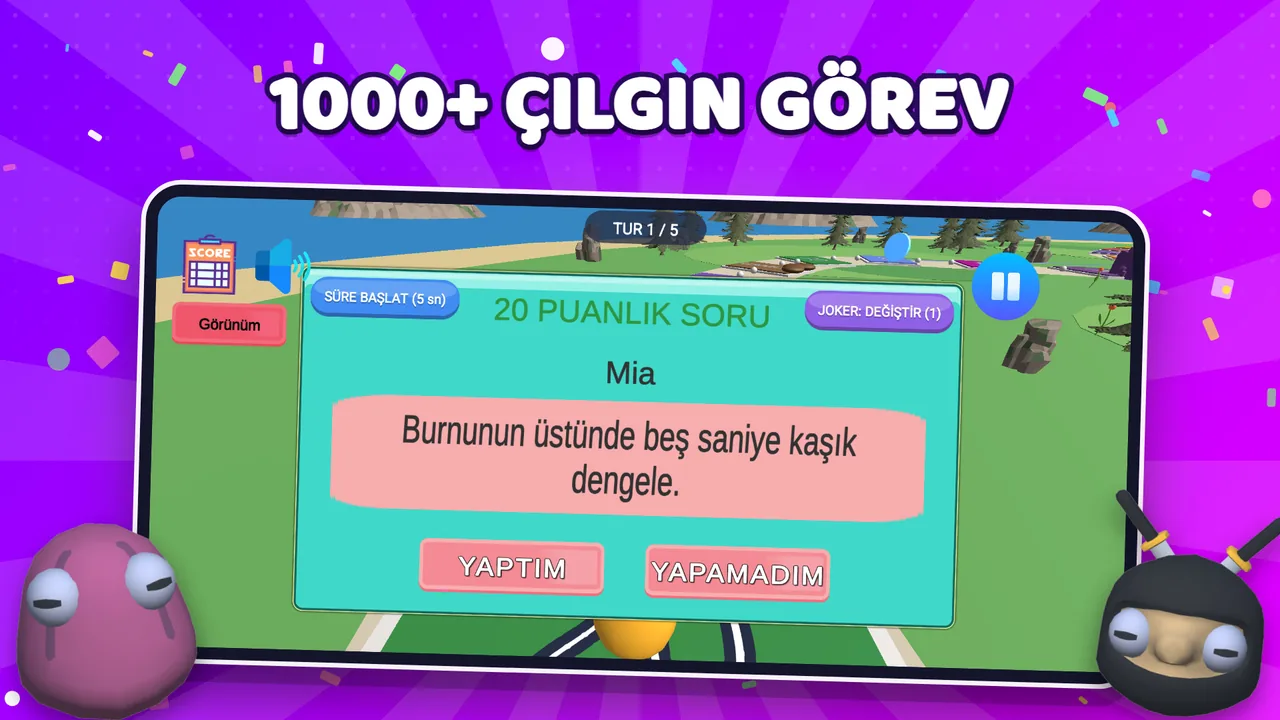
Roll or Dare: a board game where you add players and start rolling, and the game handles tasks and score. The group picks the task category: Family at a class event, Party at a friend hangout. Large classes can use Team mode to split into Red and Blue. It works with 2–10 players, so it works both in a three-person dorm room and a ten-person hangout; no setup or supplies needed.
Frequently Asked Questions
What games do you play in a high school group?
Games with short rules, quick turns, and no one forced. Silent describing, Impersonation, and task games with difficulty levels are the ones that stick best in young groups.
How do you play with a crowd at a class event?
Split into 3–4 teams, pick simultaneous-play modes, and cut round time to 45 seconds. Reducing wait time increases participation noticeably.
What about shy friends?
Give them a pass and start with warmup tasks. In difficulty-tiered games, the group finds its own level, so no one struggles.

Roll or Dare: Party Board Game
Roll the dice, do the task! 1000+ tasks, Adventure Island, monsters, mini-games, and a Destiny Spinner. 2–10 person party game on one phone.