Games for Big Groups: How to Play with 8+ People Without Getting Bored
The one problem of groups bigger than 8: whoever is waiting for their turn gets bored, looks at their phone, and the game effectively drops to 4-5 people. But if you pick the right mode, even 16 people have fun at the same time. In this article we explain the types of games and the tactics that work in big groups.
Why does a game fall apart in a crowd?
In a group of ten playing a turn-based game, every player spends ninety percent of the time outside their own turn just watching. The spectator looks at their phone in the second round, drifts into chatting in the third, and the game effectively drops to five people.
There are two ways to solve this: either pick modes where everyone plays at the same time, or split the group into teams so that every player is part of a side.
Modes where everyone plays at the same time
- Most Likely — A question is read, everyone points at someone at the same time. No turns, no waiting.
- Vote-based truth games — A statement is read, everyone says “true” or “false”. All 16 people play in a single round.
- Word hunt — A letter is given, everyone fills in their own list at the same time. When the time is up, you count together.
Fast ways to form teams
Choosing teams by hand takes five minutes and usually the same three people end up together. Splitting randomly is both fairer and faster.
- Use the random team picker: enter the names and let the app split them in a balanced way.
- Adjust the team count to the number of players: 2 teams for 8 people, 3 for 12, 4 for 16.
- Change the explainer within the team every round; when the same person explains again and again, the others turn into spectators.
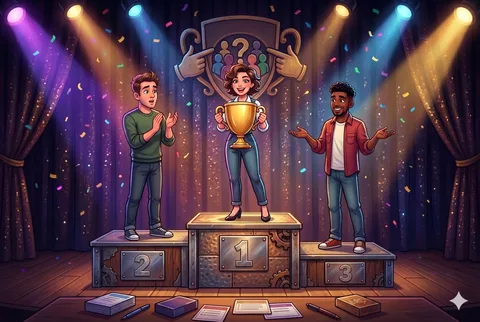
Setting the round time for a big group
In a crowd the total time grows quickly. In a group of 12 with 90-second turns, a single round takes 18 minutes. Cutting the turn time to 45–60 seconds brings the same round down to 10 minutes, and you reach the second round without losing the pace.
A practical rule: total play time should not exceed 25 minutes. Taking a break and switching to another mode the moment you pass it works better than forcing the same game to drag on.
Getting a bored person back into the game
- Give the spectators the role of “jury”: let them make the true/false call.
- Count the score out loud; people tend to come back into the game as they hear the score.
- Play one round entirely with a mode chosen by a brand-new player.
Starting with a ready-made mode list
The 30+ game modes in HomeParty are designed to scale from 2 to 16 people. The Fun Series mode plays 7 different games back to back in a single match — ending the "what shall we play?" debate in big groups. Forming teams, keeping time and counting the score is the app's job; all the group has to do is pass the phone from hand to hand.
Frequently Asked Questions
Which game do you play with 10 people?
With groups of ten, team-based word games (Taboo, Silent Word) and vote modes played at the same time give the best results. Avoid long turn-based games.
How do I divide teams fairly?
The random team picker is the most practical way. When you enter the names and let it split them, there are no arguments and every round brings different pairings.
How long should a game last?
The best approach is not to exceed 20–25 minutes in a single mode. Participation drops as the time stretches; switching modes brings the energy back.
HomeParty
30+ party and brain games, one app. Pass the phone from hand to hand and the night begins.